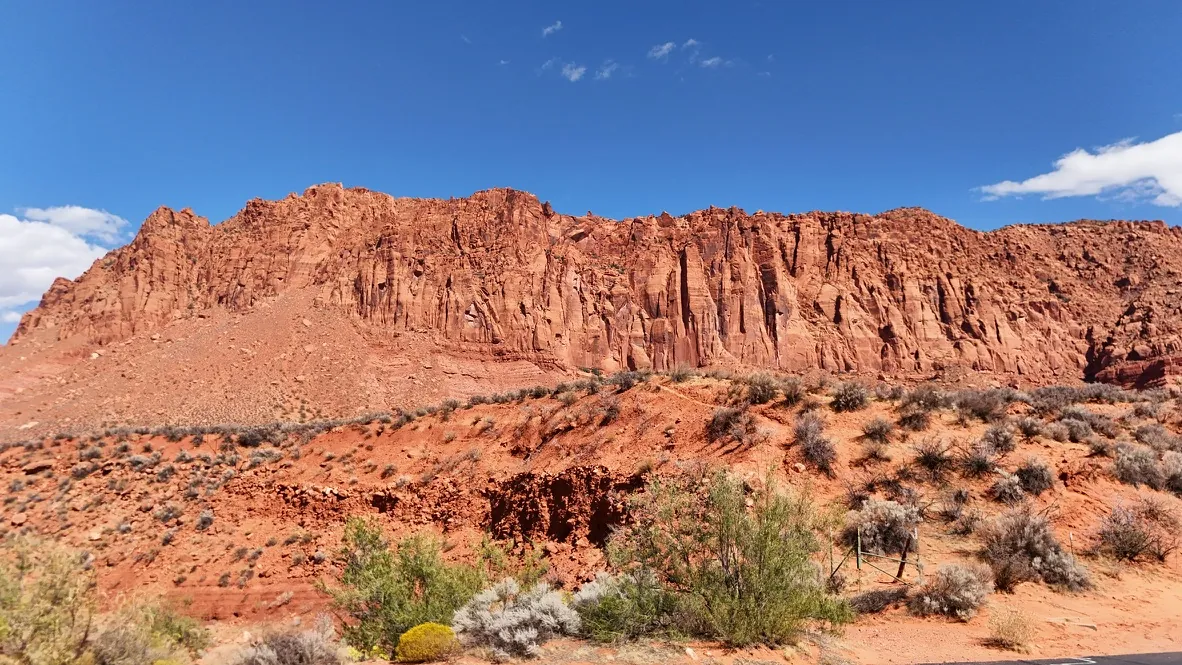
For most people in Ivins, Snow Canyon is simply the backyard: the red and white sandstone, black lava and sand dunes you see from town. People were using the canyon long before Ivins existed, though, and its life as a state park started with a small land donation in the late 1950s. Here is how Snow Canyon went from a place for hunting, grazing and picnics to one of Utah’s earliest state parks.
Thousands of years of human use
Utah State Parks says artifacts show people were in Snow Canyon by 500 B.C., and that people have probably used the canyon for more than 10,000 years, from Paleoindian mammoth hunters to 19th-century settlers. The Washington County Historical Society fills in more of the story. Ancestral Puebloans lived in the area from about A.D. 200 to 1250 and hunted and gathered in the canyon. That food added to the corn, squash and other crops they grew along the Virgin and Santa Clara rivers.
Southern Paiute people used the canyon from about A.D. 1200 to the mid-1800s. They hunted deer and rabbits and gathered seeds, roots, nuts and berries, according to the Historical Society, and they made baskets, sandals and other everyday items from canyon plants.
Explorers, settlers and lost cattle
The Historical Society names the Domínguez-Escalante party of 1776 as the first known Europeans to explore the area. Fur trappers came later, including Jedediah Smith, followed by government survey parties. Latter-day Saint pioneers started a mission at nearby Santa Clara by 1854, and St. George followed in 1861. As the local story goes, early pioneers came across Snow Canyon while they were looking for lost cattle. Ranchers later grazed cattle in the canyon.
Pioneer picnics, a singing girl and names on the wall
Snow Canyon was a place to have fun long before it was a park. The Historical Society says pioneer newspapers mention picnics and recreation in Johnson Canyon as early as 1871. Pioneer journals also tell of a young girl named Maude Johnson who sang for picnickers from beneath the canyon’s arch, where the acoustics are excellent.
Some visitors left their names behind. On the park’s short Pioneer Names Trail, you can still see names and dates that early pioneers wrote in axle grease. The Historical Society dates the oldest of them to 1881, and Utah State Parks’ trail guide describes the half-mile round-trip walk to the alcove where they appear.
The canyon mattered to Ivins’ first families in a very practical way, too. The Ivins Historical Society says the settlers of the 1920s got their culinary water from a spring then called the Snow Canyon Spring. Today it is known as Johnson Arch Spring, inside the park. (You can read more about those settlers in our earlier post, How the Santa Clara Bench Became Ivins.)
1959: Dixie State Park is born
According to the Washington County Historical Society, the park began when Washington County donated 296 acres to the State Parks Commission. The state then bought Joseph Blake’s 898-acre ranch for $20,000. That land was transferred to the State Parks Commission in 1959, creating Dixie State Park. Utah State Parks also gives 1959 as the year the park was created, and its 60th-anniversary materials in 2019 called Snow Canyon one of Utah’s earliest state parks.
The park kept growing. The Historical Society reports that the state bought another 640 acres of private land in 1960, and that in 1964 the U.S. Bureau of Land Management transferred title to 3,854 acres of federal land to the State of Utah. Utah State Parks says the park opened to the public in 1962. Today it covers about 7,400 acres.
Why it is called Snow Canyon
Both Utah State Parks and the Historical Society say the park was renamed to honor Lorenzo and Erastus Snow, prominent early Utah leaders. The sources we checked don’t agree on a clear date for the name change, so we’ll just say Dixie State Park later became Snow Canyon State Park.
A Hollywood backdrop
Snow Canyon’s cliffs and dunes have appeared in a lot of movies. Utah State Parks lists “Butch Cassidy and the Sundance Kid,” “The Electric Horseman” and “Jeremiah Johnson.” The Historical Society’s longer list also includes “Hondo,” “The Conqueror,” “The Flintstones” and “High School Musical 2.”
Snow Canyon today
The Historical Society notes that the state and county started making improvements right away. They built a water line and improved Highway 18 through the park, and hot showers were added to the campground in 1984. Today the park sits inside the 62,000-acre Red Cliffs Desert Reserve, which protects the desert tortoise. It has more than 38 miles of hiking trails, a three-mile paved walking and biking trail and more than 15 miles of equestrian trails. It is also a designated Urban Night Sky Place. Since 2011, the volunteer group Friends of Snow Canyon State Park has supported the park’s projects and conservation work.
If you’d like to live near all of this, take a look at Snow Canyon area homes for sale and Ivins homes for sale, explore our communities, or head back to the OwnUtah.com homepage.
More from the OwnUtah Journal
- Ivins History: How the Santa Clara Bench Became Ivins
- Snow Canyon in November: stargazing and ranger programs
- Follow the Flag in Snow Canyon for Veterans Day
- Snow Canyon and Zion day trips from Ivins
- Anthony W. Ivins: the man Ivins, Utah is named after
Sources
- Utah State Parks, Snow Canyon State Park (History section)
- Utah State Parks, Snow Canyon hiking and trail guides (Pioneer Names Trail)
- Utah State Parks, Snow Canyon State Park “Celebrate 60 Years” checklist (2019)
- Washington County Historical Society, Snow Canyon State Park
- Ivins Historical Society, History of Ivins City
Thanks for reading!
Robert Bolar
REALTOR®, Summit Sotheby’s International Realty
801-737-3333 · Robert@OwnUtah.com